
Does anyone else feel like every single tech headline is trying to scare us into thinking the robots are coming for our coffee breaks? I was sitting at my desk yesterday, staring at my color-coded planner and trying to map out my week, when I saw another article claiming that “the end of work” was imminent because of some new algorithm. Honestly, it’s exhausting. There is so much unnecessary noise and jargon surrounding the question of what is artificial intelligence that it’s hard to tell what’s actually useful and what’s just expensive hype designed to make us feel behind.
I’m not here to feed you the sci-fi doom or the Silicon Valley buzzwords. Instead, I want to pull back the curtain and look at this tech through a practical, human lens. My goal is to strip away the complexity and give you a clear, no-nonsense breakdown of how these tools actually function in our daily lives. We’re going to explore real-world applications that can actually help you reclaim your time, rather than just adding more chaos to your plate. Let’s make sense of this together!
Table of Contents
- A Quick Trip Through the History of Artificial Intelligence
- Machine Learning vs Artificial Intelligence Lets Clear the Confusion
- 5 Ways to Make Sense of the AI Wave Without Losing Your Mind
- The Quick Version: What We've Learned So Far
- ## A Little Perspective on the Tech Wave
- Bringing It All Home
- Frequently Asked Questions
A Quick Trip Through the History of Artificial Intelligence

Now, I know what you’re thinking—history can sometimes feel a bit dry, like a dusty textbook you’d find in the back of a library. But bear with me, because the history of artificial intelligence is actually a wild ride! It didn’t just appear out of thin air with the latest smartphone update. It all really started to simmer back in the 1950s when brilliant minds began dreaming of machines that could actually think like us. Back then, it was mostly theoretical math and some pretty clunky logic puzzles.
As the decades rolled on, we moved from those early, simple concepts into much more sophisticated territory. We saw the rise of neural networks explained through decades of trial and error, as researchers tried to mimic the way our own human brains process information. It wasn’t always smooth sailing, though—there were definitely some “AI winters” where progress felt like it had completely frozen over. But through every setback, the goal remained the same: creating systems that could learn and adapt. It’s been a long, colorful journey to get to where we are today!
Machine Learning vs Artificial Intelligence Lets Clear the Confusion
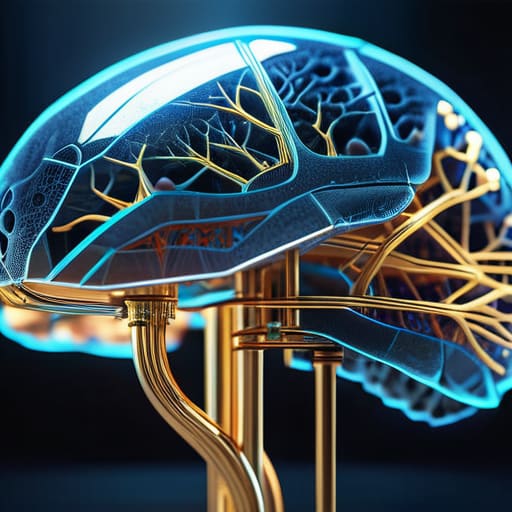
Okay, let’s dive into the part that trips almost everyone up: the difference between machine learning vs artificial intelligence. I used to get these totally mixed up too! Think of it this way: Artificial Intelligence is the big, umbrella concept—the dream of creating machines that can mimic human intelligence. It’s the overarching goal of making computers “smart.” Machine Learning, on the other hand, is like a specific subset or a specialized tool within that big toolbox. It’s the actual method where we feed data to a system so it can learn patterns on its own, without us having to hard-code every single rule.
To make it even simpler, imagine you’re teaching a child to recognize a dog. AI is the broad idea of the child being able to “think” and identify animals. Machine Learning is the specific process of showing them hundreds of pictures of golden retrievers and poodles until they eventually just get it. It’s all about that iterative process of learning from experience. Once you grasp this distinction, the rest of the tech world starts to feel a lot less overwhelming!
5 Ways to Make Sense of the AI Wave Without Losing Your Mind
- Don’t let the jargon scare you! When you hear terms like “neural networks” or “deep learning,” just think of them as different ways a computer tries to mimic the way our own brains learn from experience. It’s not magic; it’s just very fancy math!
- Look for the “hidden” AI in your daily routine. From those Netflix recommendations that actually hit the mark to the way your email predicts your next word, AI is already a quiet helper in your life. Recognizing it makes it feel way less intimidating.
- Focus on the “Augmentation” mindset. Instead of thinking AI is here to replace us, try seeing it as a super-powered assistant. It’s great at handling the repetitive, boring tasks so you can reclaim your time for the creative stuff that actually matters.
- Stay curious, but stay skeptical. It’s fun to play with new AI tools, but always keep a little bit of that human intuition handy. AI is amazing at patterns, but it doesn’t have your life experience or your “gut feeling.”
- Start small with your tech experiments. You don’t need to become a coding expert overnight. Just try using one AI-driven tool—like a smart calendar or a transcription app—to see how it simplifies one tiny part of your workflow. You’ll be surprised how much it helps!
The Quick Version: What We've Learned So Far
AI isn’t just a futuristic concept from a movie; it’s a constantly evolving field that has been growing for decades, moving from simple logic to the complex systems we use today.
While people often use the terms interchangeably, remember that AI is the big-picture goal of creating smart machines, while Machine Learning is the specific method we use to get them there.
Understanding these basics is the first step toward feeling less overwhelmed by the tech hype and more in control of how these tools actually fit into your daily life.
## A Little Perspective on the Tech Wave
“Think of artificial intelligence not as some scary, sci-fi takeover, but as a super-powered digital assistant that’s learning to help us clear the mental clutter and focus on what actually matters.”
Clara Hamilton
Bringing It All Home

Phew, we covered a lot of ground today, didn’t we? From tracing the long, fascinating history of how these machines started thinking, to finally untangling that messy knot between general AI and the specific magic of machine learning, I hope things feel a little less overwhelming. We’ve moved past the sci-fi movie tropes and started looking at the actual mechanics of how this tech works in our everyday lives. At its core, AI isn’t some mysterious, looming shadow; it’s a powerful toolkit designed to process information and solve problems in ways that complement our own human ingenuity.
As we move forward into this brave new world, my best advice is to stay curious rather than overwhelmed. It’s easy to feel like the pace of technology is moving a mile a minute, but remember that you don’t need to be a computer scientist to navigate it. Think of AI as just another new way to simplify the chaos and reclaim your time. Let’s embrace these tools with an open mind and a bit of intentionality, using them to enhance our creativity rather than replace it. You’ve got this, and I’ll be right here with you, simplifying the journey one step at a time!
Frequently Asked Questions
Is AI actually going to take over my job, or is it more of a helpful sidekick?
I know, I know—it’s the million-dollar question that keeps us all up at night! Honestly? I see AI more as the ultimate productivity sidekick rather than a replacement. Think of it like my color-coding system: it doesn’t do the journaling for me, but it makes the process so much smoother. It’s great at handling those repetitive, soul-crushing tasks, freeing you up to focus on the creative, human stuff that actually matters.
How can I start using AI in my daily routine without feeling totally overwhelmed?
Don’t worry, I totally get it! The tech whirlwind can feel like way too much. My best advice? Start small. Think of AI as your new digital assistant rather than a total life overhaul. Maybe use it to draft a quick grocery list or help you brainstorm meal ideas for the week. Pick one tiny, repetitive task that drains your energy and let AI tackle it first. Slow and steady wins the productivity race!
What are some real-world examples of AI that I’m probably already using without even realizing it?
Honestly, it’s everywhere! You’re probably interacting with AI right now without even realizing it. Think about those Netflix recommendations that seem to know your mood perfectly, or how your phone unlocks just by looking at your face. Even your email filtering out spam or Spotify curating that “Daily Mix” is AI working its magic behind the scenes. It’s not just sci-fi robots; it’s these little digital helpers making our daily chaos a bit more seamless!
